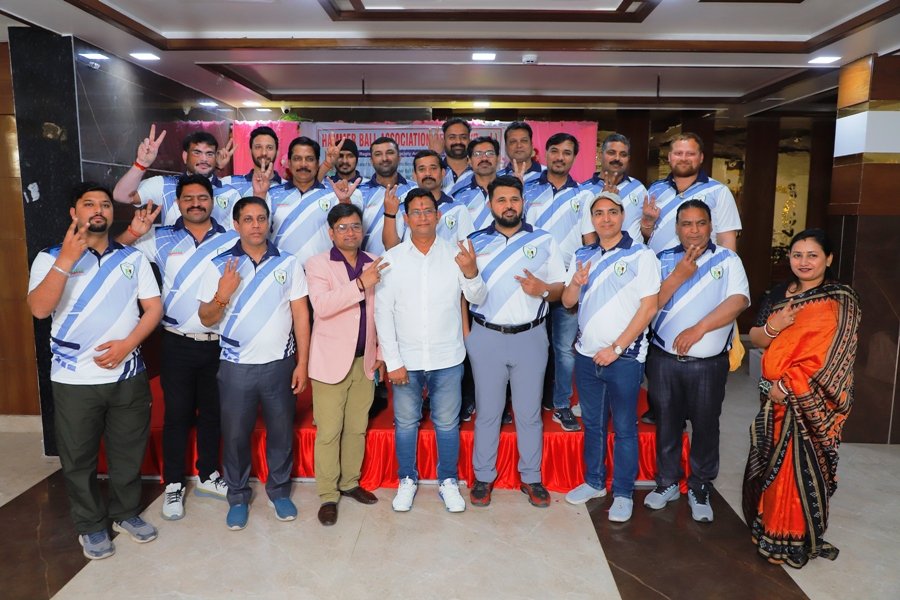
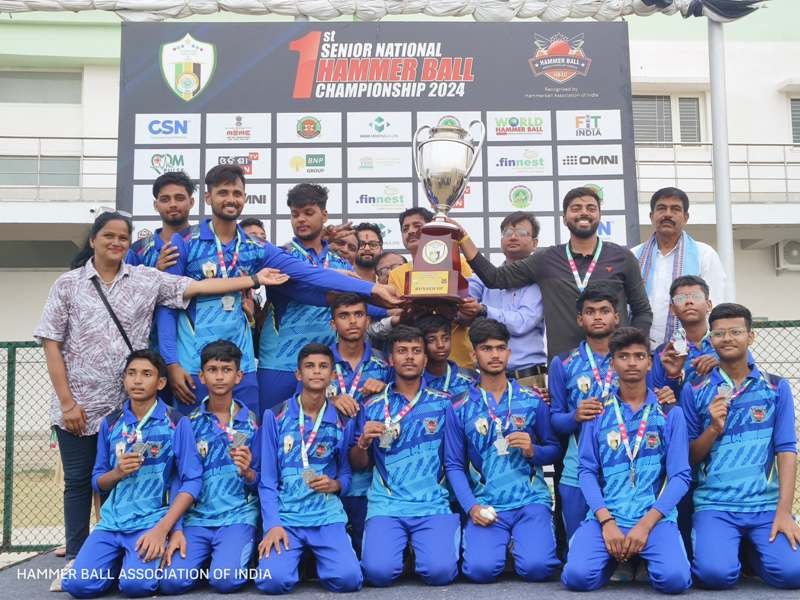


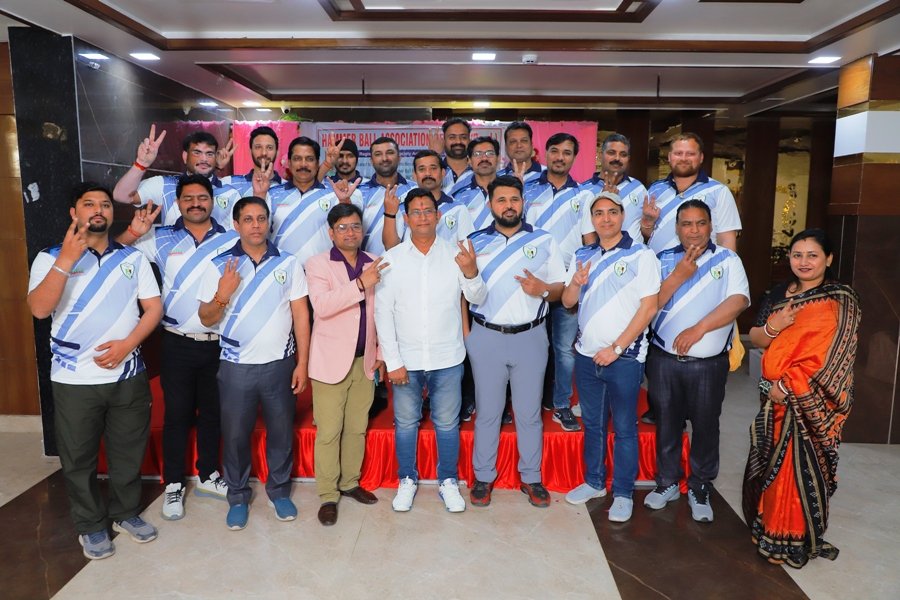
The World Hammer Ball (WHB) is the global governing body for Hammer Ball, and the Hammer Ball Association of India (HBAI) operates under WHB as its national affiliate. We are committed to developing and nurturing Hammer Ball as a recognized sport nationwide. We aim to build a strong sporting culture by organizing district, state, national, and international tournaments, providing training programs, and ensuring fair opportunities for all players.

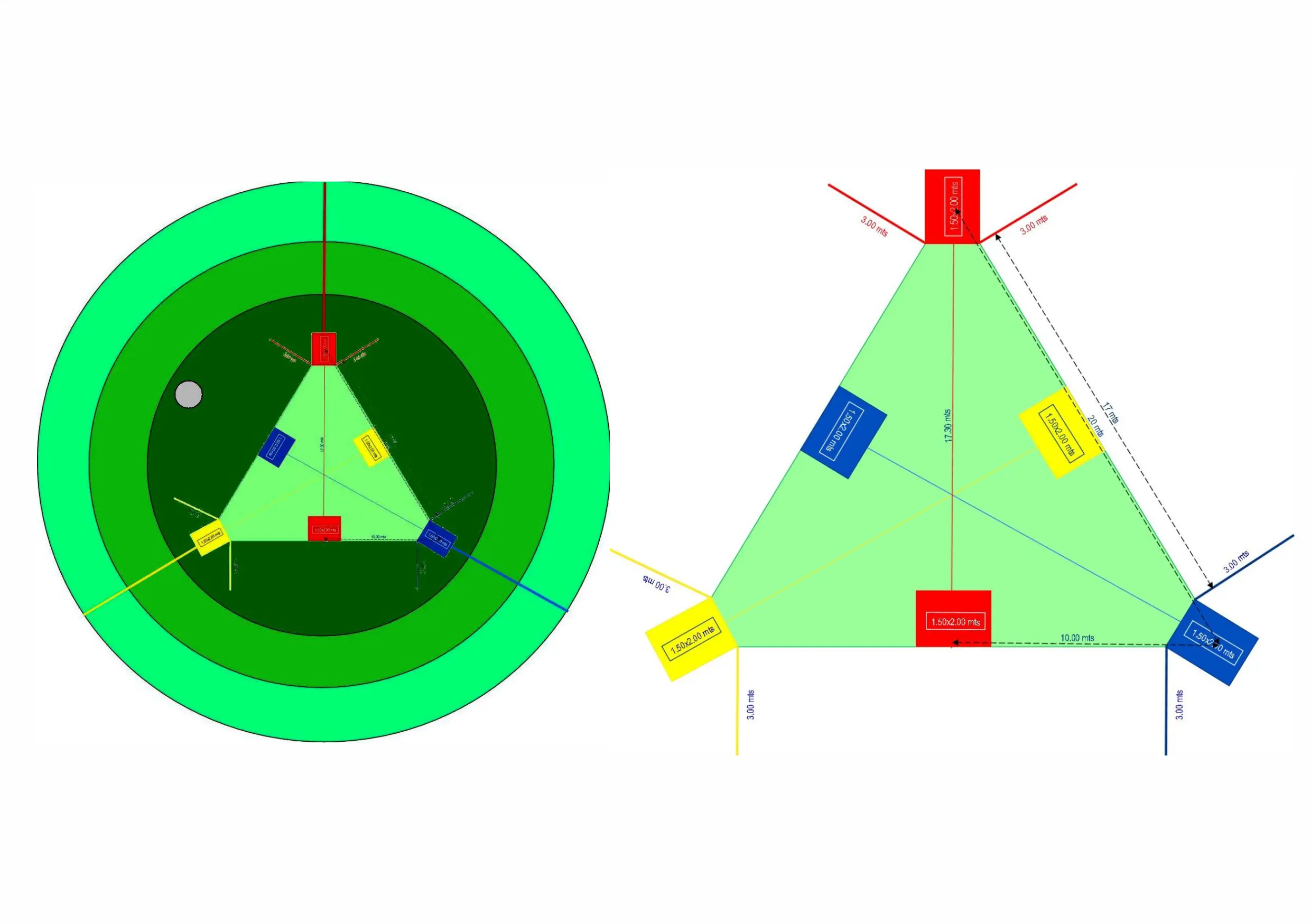
A triangular zone where throwers deliver precise, strategic balls to hitters for scoring powerful runs.
Special corner boxes inside the pitch where skilled hitters position to strike and control the ball effectively.
Marked running paths between hitter zones where players quickly sprint to complete scoring runs after striking.
Fielders positioned smartly in home, inner, and outer fields to stop runs and create dismissals efficiently.
A specially crafted wooden bat designed to strike power shots with control, speed, and long-distance precision.
A double-layered, injury-safe ball (80–120g) built for grip, bounce, durability, and smooth controlled throwing action.
A standard-sized field with well-marked zones, visible boundaries, and structured sections to ensure fair gameplay.
A specialized area near home field where keepers protect, defend goals, and coordinate the team’s defensive strategy.

Second, the story itself critiques our modern dependency on digital navigation and instant rescue. Donn Fendler had no GPS, no cell phone, no emergency beacon — only his wits, a tattered shirt, and the will to follow a stream downhill. The irony of watching this survival tale via a WEB-DL (a file meant for seamless, algorithm-driven streaming) is palpable. Today, a lost hiker triggers a satellite ping and a helicopter. In 1939, survival meant understanding moss growth, animal trails, and the taste of stream water. The film quietly asks: Have our digital crutches weakened our primal instincts? The 1080p format, with its flawless bitrate and lack of physical media, underscores this loss — we hold the wilderness at arm’s length, mediated by pixels.
In conclusion, Lost on a Mountain in Maine (2024) succeeds because it refuses to romanticize its source material. The WEB-DL-1080p release is not a contradiction but a conscious framing device: pristine technology showcasing a world without technology. Donn Fendler survived by embracing the physical, the immediate, the low-tech. We, the viewers, survive the film by sitting through its discomfort — pixel by pixel, minute by minute — reminded that some wildernesses cannot be mapped by satellites. And perhaps that is the film’s most solid lesson: clarity of image does not guarantee clarity of direction. Sometimes, being lost is the only way to find yourself. Lost on a Mountain in Maine -2024- WEB-DL-1080p...
If you’re asking me to write based on that title and the file specs you’ve noted ( WEB-DL-1080p — probably the release quality/format), here’s a concise, well-structured essay analyzing the film’s likely themes, the significance of its format, and the narrative impact. Essay: Surviving the Digital Wilderness — Lost on a Mountain in Maine (2024) In an era where high-definition streaming dominates visual storytelling, the 2024 film Lost on a Mountain in Maine arrives as a stark counterpoint to spectacle-driven cinema. Based on Donn Fendler’s harrowing 1939 survival ordeal, the film strips away CGI grandeur to focus on raw human endurance. The technical descriptor WEB-DL-1080p — denoting a direct download of pristine digital quality — ironically frames a story about the absence of technology, comfort, and civilization. This essay argues that the film’s power lies in its minimalist approach: the 1080p clarity serves not to embellish but to confront viewers with the terrifying beauty of nature, while the narrative itself becomes a metaphor for digital-era disconnection. Second, the story itself critiques our modern dependency
Finally, the narrative structure mirrors the disorientation of the lost. The film avoids a linear timeline, instead fragmenting Donn’s nine days into sensory impressions: hunger, cold, despair, fleeting hope. This editing choice, preserved in the crisp WEB-DL transfer, prevents the viewer from ever feeling safe. Just when a scene resolves, we cut to another night of freezing rain. The high resolution does not soften these blows; it amplifies them. By the final act — Donn’s rescue and reunion with his father — the audience feels the same exhausted relief as the boy. The 1080p image, devoid of film grain or VHS degradation, becomes a clean window onto a dirty, brutal reality. Today, a lost hiker triggers a satellite ping
First, the visual clarity of WEB-DL-1080p enhances the film’s central tension. Every scratch on Donn’s face, every drop of rain, every shifting shadow on Katahdin’s granite slopes is rendered with forensic detail. This is not the glossy hyper-reality of a Marvel blockbuster but a documentary-like rawness. The high-definition transfer forces the audience to experience the boy’s dehydration, hypothermia, and fear without the buffer of artistic abstraction. In doing so, the film transforms the home-viewing experience — typically passive and comfortable — into something uncomfortable and immediate. We are not merely watching Donn suffer; we are sitting in our living rooms, confronted by his pain in crystalline detail.
Second, the story itself critiques our modern dependency on digital navigation and instant rescue. Donn Fendler had no GPS, no cell phone, no emergency beacon — only his wits, a tattered shirt, and the will to follow a stream downhill. The irony of watching this survival tale via a WEB-DL (a file meant for seamless, algorithm-driven streaming) is palpable. Today, a lost hiker triggers a satellite ping and a helicopter. In 1939, survival meant understanding moss growth, animal trails, and the taste of stream water. The film quietly asks: Have our digital crutches weakened our primal instincts? The 1080p format, with its flawless bitrate and lack of physical media, underscores this loss — we hold the wilderness at arm’s length, mediated by pixels.
In conclusion, Lost on a Mountain in Maine (2024) succeeds because it refuses to romanticize its source material. The WEB-DL-1080p release is not a contradiction but a conscious framing device: pristine technology showcasing a world without technology. Donn Fendler survived by embracing the physical, the immediate, the low-tech. We, the viewers, survive the film by sitting through its discomfort — pixel by pixel, minute by minute — reminded that some wildernesses cannot be mapped by satellites. And perhaps that is the film’s most solid lesson: clarity of image does not guarantee clarity of direction. Sometimes, being lost is the only way to find yourself.
If you’re asking me to write based on that title and the file specs you’ve noted ( WEB-DL-1080p — probably the release quality/format), here’s a concise, well-structured essay analyzing the film’s likely themes, the significance of its format, and the narrative impact. Essay: Surviving the Digital Wilderness — Lost on a Mountain in Maine (2024) In an era where high-definition streaming dominates visual storytelling, the 2024 film Lost on a Mountain in Maine arrives as a stark counterpoint to spectacle-driven cinema. Based on Donn Fendler’s harrowing 1939 survival ordeal, the film strips away CGI grandeur to focus on raw human endurance. The technical descriptor WEB-DL-1080p — denoting a direct download of pristine digital quality — ironically frames a story about the absence of technology, comfort, and civilization. This essay argues that the film’s power lies in its minimalist approach: the 1080p clarity serves not to embellish but to confront viewers with the terrifying beauty of nature, while the narrative itself becomes a metaphor for digital-era disconnection.
Finally, the narrative structure mirrors the disorientation of the lost. The film avoids a linear timeline, instead fragmenting Donn’s nine days into sensory impressions: hunger, cold, despair, fleeting hope. This editing choice, preserved in the crisp WEB-DL transfer, prevents the viewer from ever feeling safe. Just when a scene resolves, we cut to another night of freezing rain. The high resolution does not soften these blows; it amplifies them. By the final act — Donn’s rescue and reunion with his father — the audience feels the same exhausted relief as the boy. The 1080p image, devoid of film grain or VHS degradation, becomes a clean window onto a dirty, brutal reality.
First, the visual clarity of WEB-DL-1080p enhances the film’s central tension. Every scratch on Donn’s face, every drop of rain, every shifting shadow on Katahdin’s granite slopes is rendered with forensic detail. This is not the glossy hyper-reality of a Marvel blockbuster but a documentary-like rawness. The high-definition transfer forces the audience to experience the boy’s dehydration, hypothermia, and fear without the buffer of artistic abstraction. In doing so, the film transforms the home-viewing experience — typically passive and comfortable — into something uncomfortable and immediate. We are not merely watching Donn suffer; we are sitting in our living rooms, confronted by his pain in crystalline detail.


Delhi |
National Championships
VSMarch 15, 2024
|

Mumbai |

Bangalore |
State Championships
VSApril 20, 2024
|

Chennai |
Delhi |
State Finals
3 : 1Feb 28, 2024
|
Mumbai |
Bangalore |
District Finals
2 : 0Feb 20, 2024
|
Chennai |
HAMMER BALL ASSOCIATION OF INDIA IS GOING TO BE ADD A NEW CHAPTER IN November 2025. THAT IS 2ND JUNIOR NATIONAL (U-19) CHAMPIONSHIP 2025 TO BE HELD SO...
| Pos | State | P | W | L | PTS |
|---|---|---|---|---|---|
| 1 | Puducherry | 0 | 0 | 0 | 0 |
| 2 |  Jharkhand Jharkhand | 0 | 0 | 0 | 0 |
| 3 |  West Bengal West Bengal | 0 | 0 | 0 | 0 |
| 4 |  Uttar Pradesh Uttar Pradesh | 0 | 0 | 0 | 0 |
| 5 |  Tripura Tripura | 0 | 0 | 0 | 0 |
| 6 |  Tamil Nadu Tamil Nadu | 0 | 0 | 0 | 0 |
| 7 |  Rajasthan Rajasthan | 0 | 0 | 0 | 0 |
| 8 |  Punjab Punjab | 0 | 0 | 0 | 0 |