|
|||||||||||||||
|
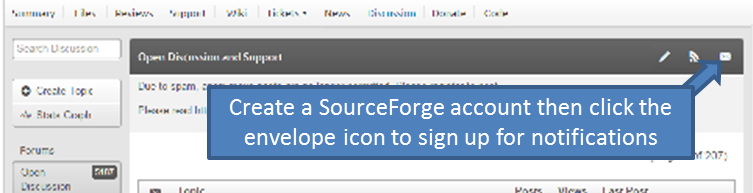
FreeRTOS Support ArchiveThe FreeRTOS support forum is used to obtain active support directly from Real Time Engineers Ltd. In return for using our top quality software and services for free, we request you play fair and do your bit to help others too! Sign up to receive notifications of new support topics then help where you can.
Loading
FreeRTOS tasks can interrupt USB stack implementation?Posted by ddudas on September 24, 2015 Hi all, I'm using ST's CubeMX implementation on a F4 discovery board. I use ST's USB middlewares with FreeRTOS. When I get a special OutputReport from PC side I have to answer nearly immediately (in 10-15 ms). Currently I cannot achieve this timing and it seems my high priority tasks can interrupt the USB callback. What do you think, is it possible? Because it's generated code I'm not sure but can I increase the priority of the USB interrupt (if there is any)? Thank you, David FreeRTOS tasks can interrupt USB stack implementation?Posted by rtel on September 24, 2015 10 to 15 ms is very slow, so I'm sure its possible. Where is the USB callback function called from? If it is an interrupt then it cannot be interrupted by high priority RTOS tasks. Any non interrupt code (whether you are using an RTOS or not) can only run if no interrupts are running. Without knowing the control flow in your application its hard to know what to suggest. How is the OutputReport communicated to you? By an interrupt, a message from another task, or some other way? FreeRTOS tasks can interrupt USB stack implementation?Posted by ddudas on September 24, 2015 The callback which receive the data from PC is called from the OTGFSIRQHandler (it's the part of the HALPCDIRQHandler function). I think the problem is SysTickHandler's priority is higher than OTGFSIRQHandler and it's cannot be modified, but the scheduler shouldn't interrupt the OTGFSIRQHandler with any task handled by the scheduler. Am I wrong that the scheduler can interrupt the OTGFS_IRQHandler? FreeRTOS tasks can interrupt USB stack implementation?Posted by rtel on September 24, 2015 The Dynamics of Entertainment Content and Popular Media: Influence, Convergence, and Audience Engagement in the Digital Age [Generated AI Assistant] Course: Media Studies & Popular Culture Date: October 2023 Entertainment content and popular media have historically served as both a reflection of societal values and a mechanism for cultural transmission. In the contemporary digital landscape, the relationship between producers and consumers has shifted from a linear broadcast model to a dynamic, participatory culture. This paper examines the evolution of entertainment content, the role of algorithmic curation in shaping popular media, and the psychological and sociological implications of these changes. Key areas of analysis include the rise of streaming services, the phenomenon of "binge-watching," the influence of user-generated content (UGC) on platforms like TikTok and YouTube, and the resulting convergence of high and low cultural hierarchies. Entertainment content and popular media have evolved from a centralized, top-down system to a decentralized, interactive network. The consumer is now a producer, the schedule is now an algorithm, and the audience is now a community. While this shift has empowered diverse voices and created unprecedented access to global narratives, it has also introduced new vulnerabilities related to mental health, misinformation, and labor precarity. Future research must focus on regulatory models for algorithmic transparency and ethical design in entertainment platforms. Ultimately, understanding popular media today requires abandoning the passive audience model and embracing the complexity of participatory, convergent, and always-on digital culture. Popular media—encompassing film, television, music, digital games, and online video—constitutes the primary source of entertainment for global audiences. Historically, theorists such as Theodor Adorno and Max Horkheimer critiqued the "culture industry" as a homogenizing force that produced passive consumers. However, the advent of Web 2.0 and mobile technologies has fundamentally altered this dynamic. Today, audiences are not merely recipients but active co-creators of entertainment content. This paper argues that the current ecosystem is characterized by (niche content for specific subcultures) and simultaneous globalization (viral phenomena crossing linguistic and national borders). FreeRTOS tasks can interrupt USB stack implementation?Posted by ddudas on September 24, 2015 Thank you for the answer, I think I'm a bit confused with the Cortex ISR priorities :-) What I can observe is if I use a much higher osDelay in my high priority task I can respond for the received USB message much faster. This is why I think tasks can mess up with my OTG interrupt.
Copyright (C) Amazon Web Services, Inc. or its affiliates. All rights reserved.
|
||||||||||||||




NXP tweet showing LPC5500 (ARMv8-M Cortex-M33) running FreeRTOS.
Meet Richard Barry and learn about running FreeRTOS on RISC-V at FOSDEM 2019
Version 10.1.1 of the FreeRTOS kernel is available for immediate download. MIT licensed.
View a recording of the "OTA Update Security and Reliability" webinar, presented by TI and AWS.
FreeRTOS and other embedded software careers at AWS.