Do not use the final test in isolation. Weight it as 50% of the final grade. The other 50% must come from a portfolio or performance-based assessment (e.g., a 2-minute video presentation or a recorded role-play). Conclusion: The Test as a Map, Not the Territory The Face2face Intermediate Final Test is a sophisticated piece of assessment, but it suffers from the universal problem of standardized testing: it prioritizes accuracy over agility . A student who passes with 75% has proven they can identify the past perfect in a gap-fill. They have not proven they can use it in a frantic conversation about a missed flight.

Unlike traditional grammar-heavy finals, this test attempts to measure the "Intermediate Plateau"—that frustrating phase where students stop progressing linearly and begin refining nuance. This article dissects the test’s structure, its hidden pedagogical philosophies, and the common failure points that reveal deeper truths about language acquisition. The standard Face2face Intermediate Final Test usually comprises five core components, though teachers often supplement it with a writing or speaking portfolio. Here is the typical distribution:

| Component | Weight | Question Types | Hidden Agenda | | :--- | :--- | :--- | :--- | | | 40% | MCQs, gap-fill, error correction, sentence transformation | Passive recognition vs. active recall | | Reading | 20% | Skimming (headline matching), scanning (True/False/Not Given), gist | Differentiating between literal meaning and implication | | Listening | 20% | Monologues (radio snippets), dialogues (distractions), note completion | Decoding connected speech (elision, assimilation) | | Writing | 10% | Email, informal letter, short opinion paragraph (100–120 words) | Cohesion & appropriacy (register) | | Speaking | 10% | Interactive pair task (role-play or collaborative task) | Repair strategies & turn-taking |

To truly "pass" the intermediate level, a student must learn to stop translating from their native language. The final test reveals where the translation engine breaks down. Use the score not as a judgment, but as a debugging tool for the intermediate brain. The real final test happens the first time the student successfully argues with a landlord or laughs at a joke in English. The bubble sheet is just a proxy.

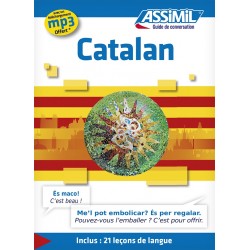
Guida di conversazione ePub2 per imparare a comprendere e parlare il catalano.

Se stai organizzando un viaggio a Barcellona e vuoi riuscire a parlare e a comprendere il catalano senza alcuna difficoltà, scarica la Guida di Conversazione di Catalano in formato ePub2 su base francese.

Che sia un viaggio di piacere o per affari, questa guida di conversazione è un aiuto indispensabile per un approccio pratico al vocabolario e alle espressioni quotidiane catalane: una guida di catalano pratica, semplice e utile che ti potrà aiutare in ogni situazione.

All’interno della guida su base francese troverai:

  • 21 lezioni introduttive con le regole grammaticali di base
  • Un’ampia sezione sulla conversazione
  • Espressioni e vocabolario divisi per argomento e per aiutarvi in ogni situazione della vita quotidiana catalana
  • Tutta la pronuncia e le traduzioni in francese

Guida di conversazione in formato ePub 2 (solo testo)

Avvertenze:
Questo formato elettronico può essere letto solo sui dispositivi iOS (iPod, iPhone, iPad) con l'applicazione iBooks installata oppure direttamente su Mac o Pc.
Per leggerlo su Mac è necessario installare l'applicazione iBooks. Per leggerlo su Pc è consigliato installare l'estensione Readium su Google Chrome.
Questo titolo non può essere scaricato direttamente su un dispositivo iOS (iPod, iPhone, iPad), ma bisogna obbligatoriamente passare attraverso un computer (Pc o Mac), seguendo le istruzioni fornite qui di seguito.

Modo d'uso (PC e Mac):
Dopo aver effettuato l'acquisto su questo sito, si potrà scaricare il file in formato ZIP sul proprio computer direttamente dal proprio profilo personale (scheda "Prodotti digitali acquistati"), dopodiché si potrà estrarre il file in formato EPUB e aprirlo con l'applicazione iBooks (Mac) oppure con l'estensione Readium di Google Chrome (Pc/Mac).
Per trasferire questo titolo sul proprio dispositivo iOS (iPod, iPhone, iPad) bisogna prima aggiungerlo alla propria libreria iTunes e poi sincronizzare il dispositivo. Per maggiori informazioni sulla sincronizzazione, fare riferimento all'aiuto di iTunes.

Configurazione richiesta:
Mac: OS X 10.9 o successivo, iBooks 1.0 o successivo
Pc/Mac: estensione Readium per Google Chrome installata
iPad, iPhone e iPod Touch: iOS 4.3.3 o successivo, iBooks 1.3.1 o successivo

Da acquistare insieme a:


Face2face Intermediate Final Test -

Do not use the final test in isolation. Weight it as 50% of the final grade. The other 50% must come from a portfolio or performance-based assessment (e.g., a 2-minute video presentation or a recorded role-play). Conclusion: The Test as a Map, Not the Territory The Face2face Intermediate Final Test is a sophisticated piece of assessment, but it suffers from the universal problem of standardized testing: it prioritizes accuracy over agility . A student who passes with 75% has proven they can identify the past perfect in a gap-fill. They have not proven they can use it in a frantic conversation about a missed flight.

Unlike traditional grammar-heavy finals, this test attempts to measure the "Intermediate Plateau"—that frustrating phase where students stop progressing linearly and begin refining nuance. This article dissects the test’s structure, its hidden pedagogical philosophies, and the common failure points that reveal deeper truths about language acquisition. The standard Face2face Intermediate Final Test usually comprises five core components, though teachers often supplement it with a writing or speaking portfolio. Here is the typical distribution: face2face intermediate final test

| Component | Weight | Question Types | Hidden Agenda | | :--- | :--- | :--- | :--- | | | 40% | MCQs, gap-fill, error correction, sentence transformation | Passive recognition vs. active recall | | Reading | 20% | Skimming (headline matching), scanning (True/False/Not Given), gist | Differentiating between literal meaning and implication | | Listening | 20% | Monologues (radio snippets), dialogues (distractions), note completion | Decoding connected speech (elision, assimilation) | | Writing | 10% | Email, informal letter, short opinion paragraph (100–120 words) | Cohesion & appropriacy (register) | | Speaking | 10% | Interactive pair task (role-play or collaborative task) | Repair strategies & turn-taking | Do not use the final test in isolation

To truly "pass" the intermediate level, a student must learn to stop translating from their native language. The final test reveals where the translation engine breaks down. Use the score not as a judgment, but as a debugging tool for the intermediate brain. The real final test happens the first time the student successfully argues with a landlord or laughs at a joke in English. The bubble sheet is just a proxy. Conclusion: The Test as a Map, Not the
Prodotti correlati