1. Standard Oriya Keyboard Layout
High resolution image suitable for printing.
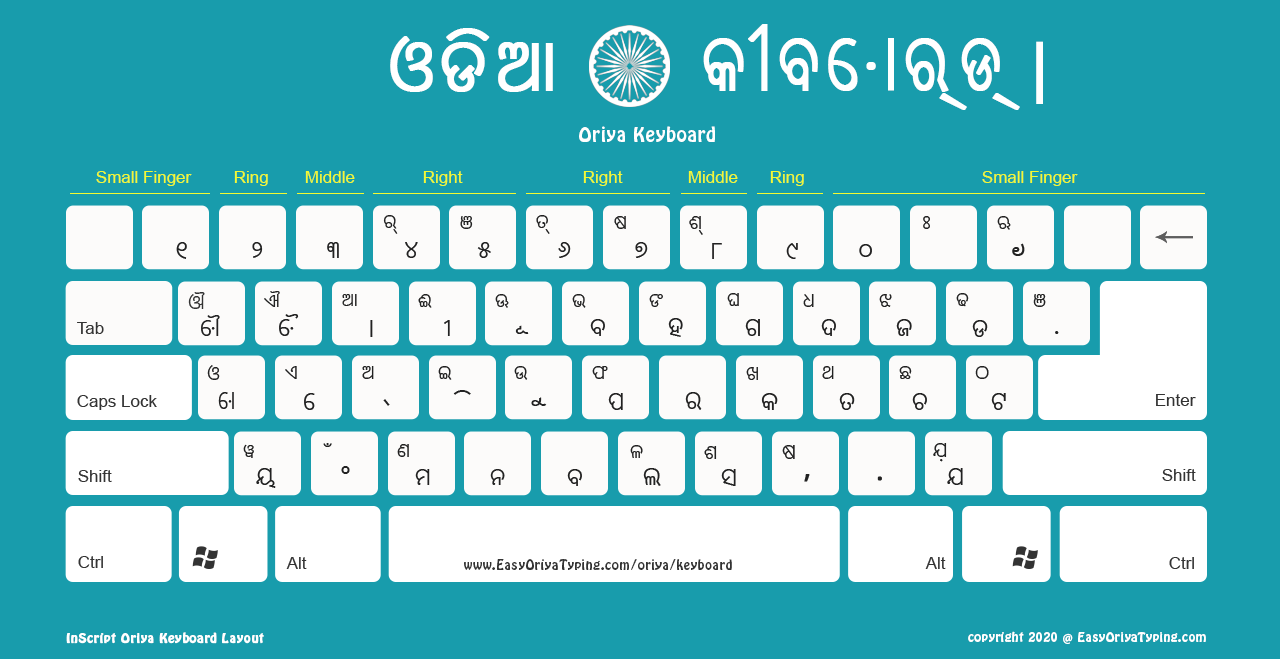
We have five different Oriya keyboard layouts for you to download on your computer. Once downloaded — you can use it as a reference to type in Oriya either on Word document or any other text editor. You also need to download the matching Oriya fonts.
High resolution image suitable for printing.
High resolution image suitable for printing.
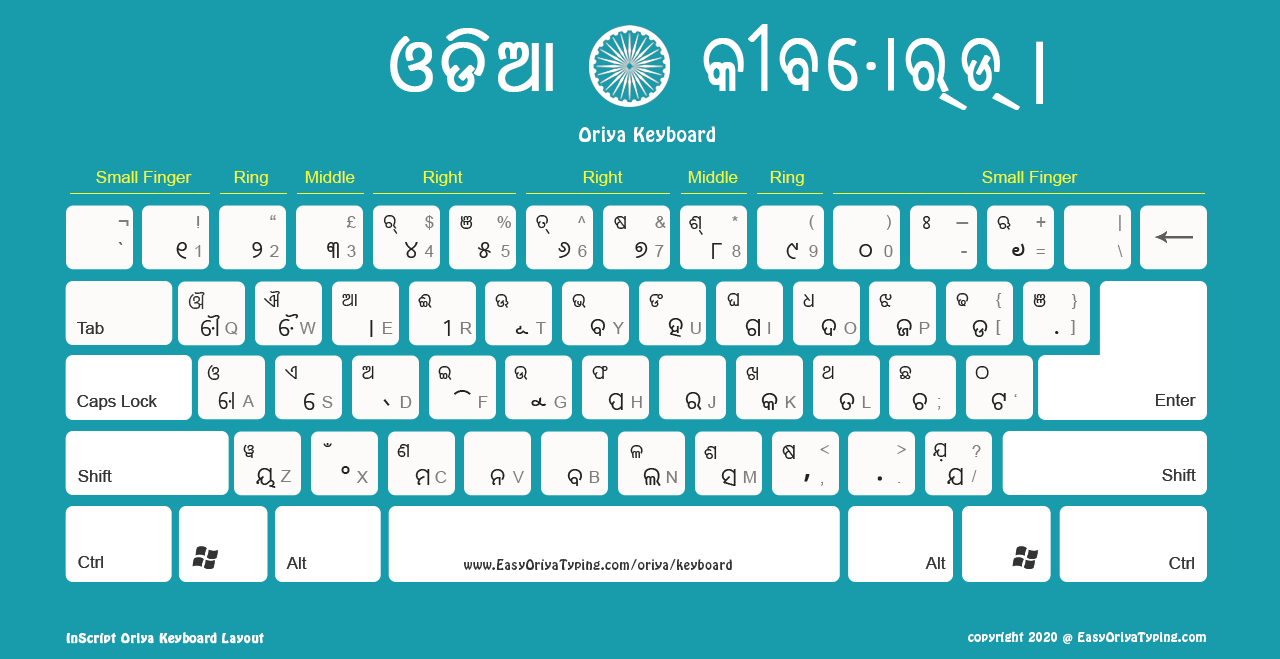
High resolution image suitable for printing.
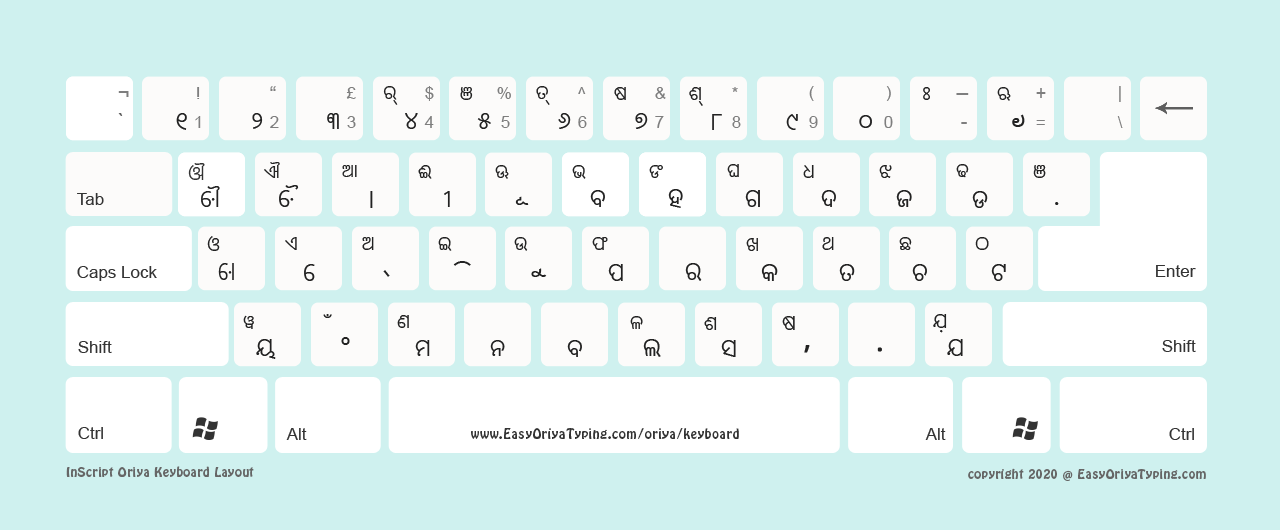
High resolution image suitable for printing.
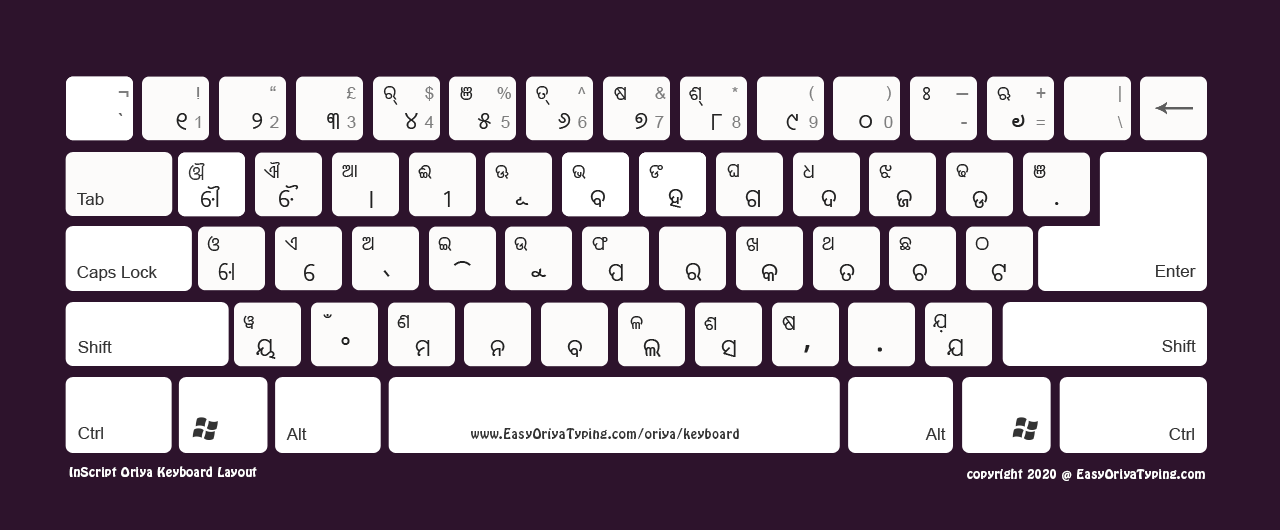
High resolution image suitable for printing.
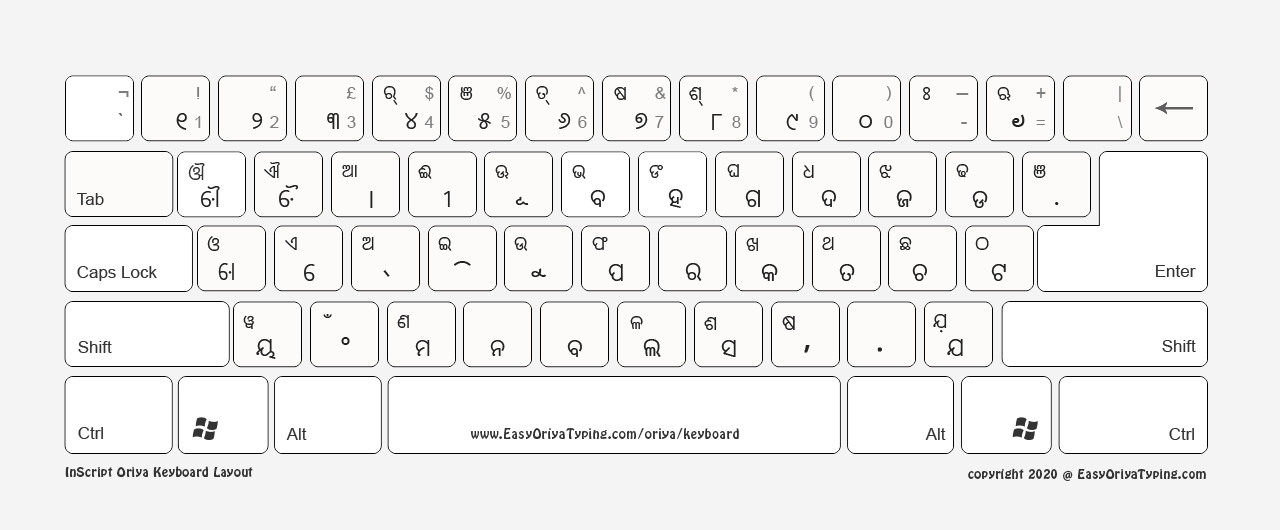
Getting started with Oriya typing is simple! Follow our step-by-step process.
Install Odia font — head over to our extensive fonts repository and install your preferred typeface.
Download your ideal keyboard image through this simple downloading process:
Browse and click on your preferred keyboard style
Right-click anywhere on the enlarged image
Choose "Save image as..." and pick your storage location
Prepare your writing space by launching your go-to text application and activating the Oriya font you installed in step one.
Begin your Oriya writing journey! Display your keyboard reference image alongside your text editor for seamless typing guidance.
Space-saving tip: Working on a compact setup? Our high-resolution keyboards deliver stunning print quality — create a physical reference that's always within reach!
Ensures traditional accuracy — each layout preserves authentic Oriya script conventions and cultural writing traditions.
Offers complete flexibility — choose from multiple styles and backgrounds to match your personal or professional preferences.
Includes unrestricted usage rights — download, print, share, and modify for any purpose without limitations or hidden costs.
The film’s central thesis is a subversion of the typical “friendship forever” trope. In the first film, Ralph and Vanellope’s bond worked because they needed each other to escape their respective loneliness. However, Ralph Breaks the Internet argues that a relationship born of mutual need can become a prison. When Vanellope discovers Slaughter Race , a gritty, online racing game that offers infinite variability compared to the static Sugar Rush , she experiences genuine joy and challenge. Ralph, conversely, experiences only terror. His attempts to sabotage Slaughter Race to bring Vanellope back are not born of malice, but of a profound, debilitating fear of abandonment. The film brilliantly visualizes this insecurity through Ralph’s creation of a giant, destructive virus-version of himself that repeats the mantra, “You are a bad guy, but you are not a bad guy .” This psychological manifestation shows that Ralph’s deepest fear is not losing a friend, but losing the identity Vanellope gave him.
In conclusion, Ralph Breaks the Internet transcends the limitations of its predecessor by using the digital world as a mirror for contemporary anxieties about friendship and self-worth. It deconstructs the idea of the “ride-or-die” best friend, revealing that such intensity can often mask deep codependency. By tackling themes of viral shame, algorithmic manipulation, and the pain of growing apart, Detona Ralph 2 stands as a surprisingly sophisticated text. It reminds us that the most dangerous virus on the internet is not a computer bug, but the human need to be needed—and that the bravest thing we can do is learn to say goodbye. detona ralph 2
Furthermore, the film serves as a sharp critique of the attention economy and online validation. The subplot involving Ralph becoming a viral sensation on “Buzztube” is a terrifyingly accurate depiction of modern internet fame. Ralph, desperate to raise money to buy Vanellope a new steering wheel, debases himself for clicks, only to discover that the algorithm is a hungry god that demands ever more dangerous stunts. This storyline highlights how the internet monetizes insecurity. Ralph’s need to be liked (a classic trait of the “good guy” he always wanted to be) is exploited by a system that reduces human emotion to metrics. The film argues that seeking validation from strangers online is a hollow substitute for genuine, reciprocal friendship. The scene where Ralph watches a comment section full of “LOL” and “ROFL” as he nearly dies is not just comedy; it is a horror sequence about digital loneliness. The film’s central thesis is a subversion of
Finally, Detona Ralph 2 offers a revolutionary perspective on the “happy ending.” Unlike most animated sequels that reset the status quo, this film argues that true friendship sometimes requires distance. The climax is not Ralph saving Vanellope from a villain, but Ralph accepting that he is the one holding her back. The resolution—where Ralph returns to the arcade and Vanellope stays in the internet—is bittersweet and bold. It teaches its young audience that love is not possession, and that security is not the same as control. By allowing Vanellope to grow, Ralph finally becomes the hero he always wanted to be: someone who sacrifices his own comfort for the happiness of another. The film replaces the simple mantra “I am bad, and that’s good” with a more complex adult truth: “I love you, so I will let you go.” When Vanellope discovers Slaughter Race , a gritty,
In 2012, Wreck-It Ralph introduced audiences to a poignant metaphor for self-acceptance, using the pixelated world of an arcade to ask if a "bad guy" could ever be a hero. Six years later, its sequel, Ralph Breaks the Internet (marketed in Portuguese-speaking markets as Detona Ralph 2 ), smashes the glass of the arcade cabinet to venture into the vast, chaotic landscape of the World Wide Web. While the film is a visual feast of easter eggs and corporate cameos (most notably the Disney princesses), its core narrative is a surprisingly mature and dark exploration of codependency, insecurity, and the difficult process of letting go. Far from a simple cash-grab sequel, Detona Ralph 2 uses its high-speed setting to diagnose a toxic friendship on the brink of collapse.
 Sambhu Raj Singh ·